Friday, March 2, 2018
Friday, February 23, 2018
Anita's Cocina Looking for "Faces" to fill-out Dancing Pepper Prop.
Monday, February 19, 2018
Joker Jill and Shiny New "Spyder" in lot at Gila Monster Eatery in Wickenburg.
Friday, February 16, 2018
Best and Most Beautiful Boots on Valentine's Day at Ben's Saddlery on Tegner.
Tuesday, February 6, 2018
Teddy Roosevelt had this to say about "treasonable' Non-Clapping.
“To announce that there must be no criticism of the president or that we are to stand by the president, right or wrong, is not only unpatriotic and servile, but is morally treasonable to the American public.”
- Theodore Roosevelt
The Full Quote from President Roosevelt appearing in the Kansas City Star, May 7, 1918
"The President is merely the most important among a large number of public servants. He should be supported or opposed exactly to the degree which is warranted by his good conduct or bad conduct, his efficiency or inefficiency in rendering loyal, able, and disinterested service to the Nation as a whole. Therefore it is absolutely necessary that there should be full liberty to tell the truth about his acts, and this means that it is exactly necessary to blame him when he does wrong as to praise him when he does right. Any other attitude in an American citizen is both base and servile.
To announce that there must be no criticism of the President, or that we are to stand by the President, right or wrong, is not only unpatriotic and servile, but is morally treasonable to the American public.
Nothing but the truth should be spoken about him or any one else. But it is even more important to tell the truth, pleasant or unpleasant, about him than about any one else."
"Roosevelt in the Kansas City Star", 149
May 7, 1918
Saturday, February 3, 2018
Thursday, January 25, 2018
With thanks to Momentum Magazine (on-line) for a fascinating refresher on the history of Cargo Bikes.
The History of Cargo Bikes
Cargo bikes originated in The Netherlands in the early 20 century, and were used by tradesmen to deliver milk, bread, and other goods in the absence of the automobile. By the 1930s, the phenomenon had spread across Scandinavia. In Copenhagen, Denmark, bike messengers called svajeres carted goods all around the city, and nearly every company owned at least one cargo bike to handle their deliveries.
Around the same time in the UK, deliveries were being made by “butcher’s bike,” a light-capacity cargo bike with a rack mounted to the frame over the front wheel. The British trend spread to the US, where Schwinn produced the original American “cycle truck,” which sold over 10,000 units in a year at its peak of popularity during WWII.
While cargo bikes have remained immensely popular for carting everything from kids to couches in parts of Europe, Asia, and Africa, their use waned considerably in North America when mass marketing of the private automobile began in earnest. These days, many North Americans have never even heard of a bicycle with high carrying capacity.
Only with the recent trend towards high-density urbanism have we seen a resurgence of interest in cargo bikes over here. As with the regular bicycle, many of the original cargo bikes designs are essentially the same today as they were in the early 20th century, with a few modern technological upgrades.
Monday, January 22, 2018
Reading Essays by the Formidable Wendell Berry
Kentucky native Wendell Berry has worn a lot of hats in his varied, prolific career. Part poet, novelist and essayist (he's written more than 40 books); social activist (Berry has lobbied the US government for years on behalf of a sensible agricultural policy); and farmer (Berry lives on the uplands of north central Kentucky, where he has developed his vital and critical views on sustainable living.)
In Our Only World, in ten essays, Wendell pulls together the strongest, most urgent and compelling writing of his I've read. The two lines below are worth our reflection and action.
"People do not become wealthy by treating one another or the world kindly and with respect. Do we not need to remember this? Do we have a single eminent leader who would dare to remind us?"
Sunday, January 14, 2018
Gotta try the "Guacammus" at Kowalski's
Tuesday, January 9, 2018
"Second Chances and New Beginnings" - excerpt from the January 2018 e-newsletter from PPL, Project for Pride in Living.
|
|
|
|
Monday, January 8, 2018
Dressed for 4-seasons in Minnesota, when anything can happen, and a guy can look as weird as he chooses.
Sunday, January 7, 2018
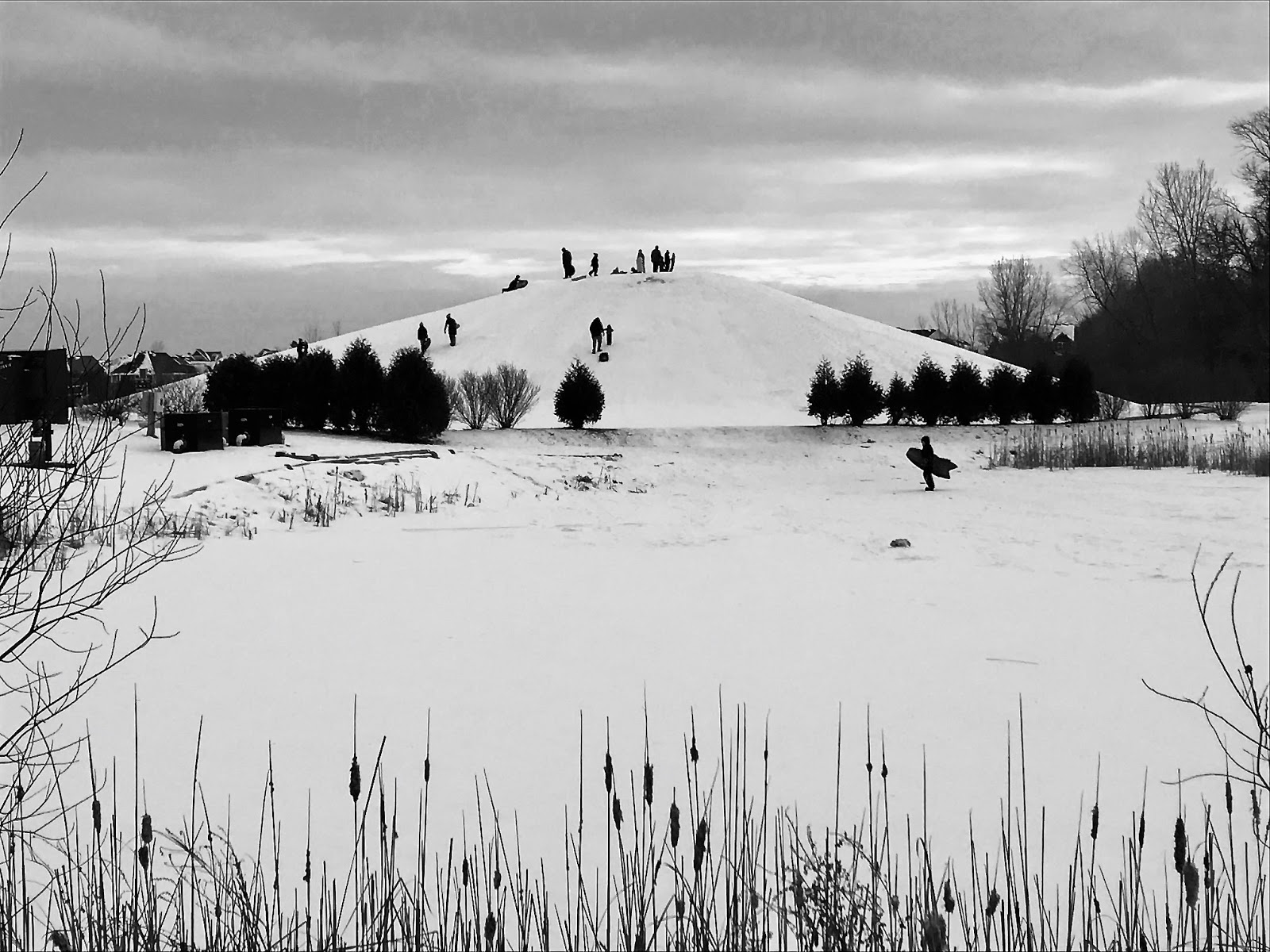
It doesn't look like Everest from this angle, but to the kold kids hauling saucer sleds and toboggans up Hamel Hill, it might as well have been the top of the world.
![]() |
| I didn't see many moms and dads offering to schlep the kids' sleds up the hill for one more run. Come to think of it when we were young sledders, there wasn't a mom and dad in sight. Child's play. |
Friday, January 5, 2018
If this bronze sculpture outside Carver County library doesn't get your young ones to love reading, then I can't imagine what will do the job.
Thursday, January 4, 2018
Gandhi Always Got it Right.
The world has enough for everyone's need, but not enough for everyone's greed.
- Mahatma Gandhi
Monday, January 1, 2018
An Unjustifiable Human Wrong.?
Health care may not be a human right, but
lack of universal health coverage in a wealthy
democracy is a severe, unjustifiable, and
unnecessary human wrong.
- David Frum, in an essay, March 2017.
Subscribe to:
Posts (Atom)


